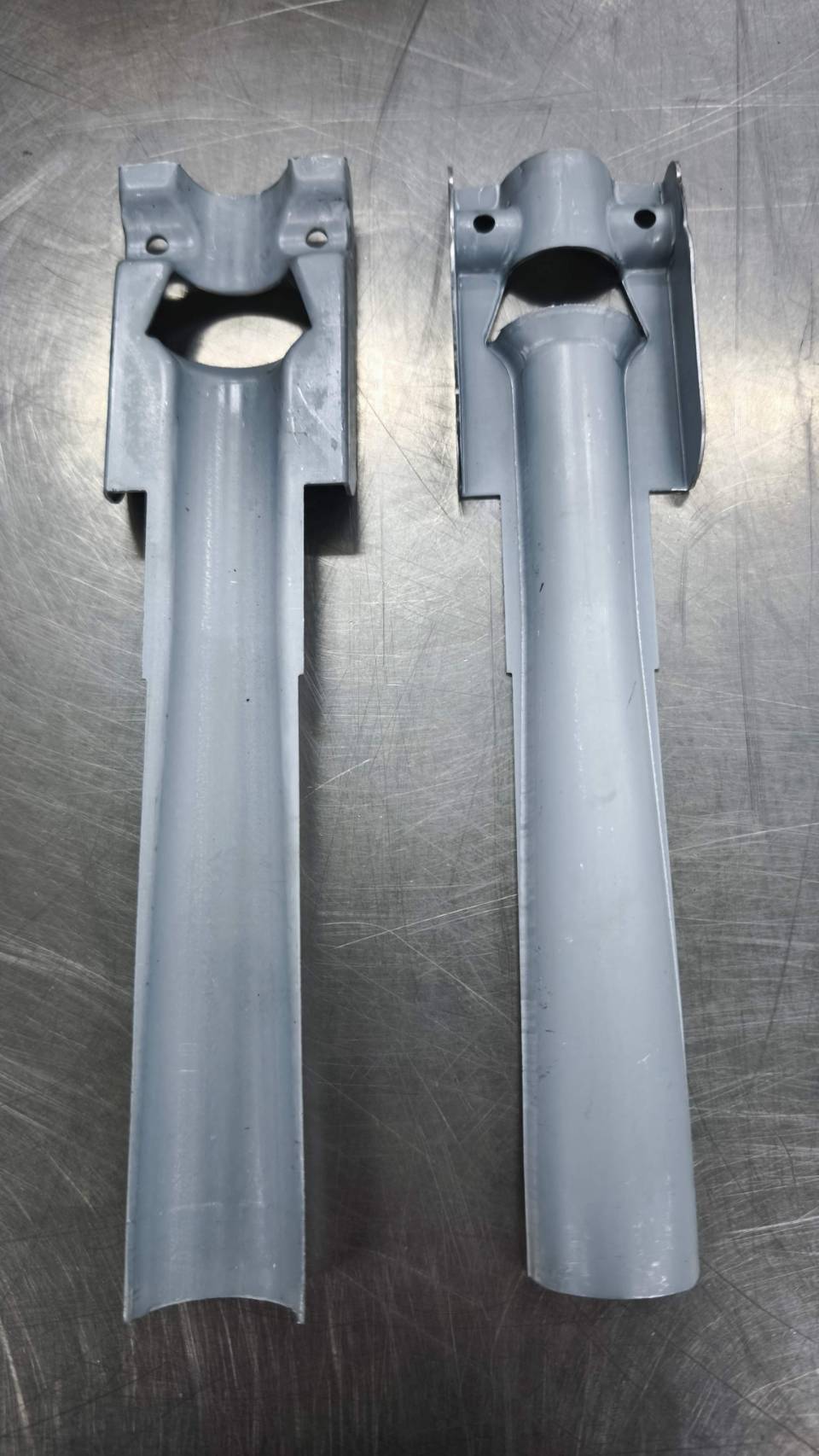
Stainless Stamping
Stamping stainless steel, such as SUS304 and SUS316, requires careful attention to ensure quality and tool longevity. Here are detailed insights and optimization suggestions for each aspect:
## Understanding Higher Pressure Requirements
**Reason:** Stainless steel, particularly SUS304 and SUS316, has higher strength and hardness compared to carbon steel, necessitating greater stamping pressure.
**Solution:** Use high-pressure capable equipment like hydraulic or servo presses, ensuring equipment stability under high loads. Regular maintenance is crucial to prevent performance degradation.
## Effective Lubrication Techniques
**Reason:** The smooth, hard surface of stainless steel can cause severe friction with molds, increasing heat and wear, leading to defects like scratches.
**Solution:** Employ high-performance lubricants with sulfur-chlorine additives to reduce friction and heat. Use spray or brush application for even distribution, and consider automated systems if necessary.
## Mold Material Selection and Wear Resistance Design
**Reason:** The high hardness and work-hardening properties of stainless steel accelerate mold wear.
**Solution:** Choose high-strength, wear-resistant materials like D2 or SKD11 tool steel, or surface-treated materials like titanium-coated or nitride molds. Adjust mold clearance to 10%-15% of sheet thickness to reduce load and burrs. Regular maintenance is essential.
## Preventing Cracking and Work Hardening
**Reason:** Work hardening during forming can hinder subsequent processing and cause cracks.
**Solution:** Control deformation within reasonable limits, avoiding excessive deep drawing. Use multi-step forming for complex parts. Include annealing processes if necessary to alleviate work hardening.
## Managing Thickness and Deformation Limits
**Reason:** Stainless steel’s low ductility makes it unsuitable for excessive deformation.
**Solution:** Evaluate material deformation limits and plan stamping steps accordingly. Use step-by-step forming for significant deformations, and consider pre-treatment or alternate grades for special shapes.
## Protecting Surface Quality
**Reason:** Stainless steel is often used for aesthetic or corrosion-resistant applications, where surface quality is critical.
**Solution:** Apply protective films before processing to prevent scratches. Ensure mold surfaces are polished to reduce scratches. Follow proper handling protocols to avoid collisions.
## Cooling and Thermal Management
**Reason:** Friction generates high temperatures, risking mold damage and material performance.
**Solution:** Implement cooling systems like forced airflow or liquid circulation. Control stamping pace to allow cooling time.
About the author